

If you’re of a certain age, do you remember “art house movies,” flicks that were rated X due to “adult situations” but were not necessarily pornographic? Our Pick of the Day features a color that’s named as an homage to one of those movies. This 1971 Plymouth ‘Cuda convertible is listed for sale on ClassicCars.com by a dealership in Celeste, Texas.
The movie in question was from Sweden. Swedish movies were a popular way to see something subversive, but subversive is all relative—many things back in the 1960s seem tame today. And that’s quite true about “I Am Curious,” a series of two movies that would have given the Church Lady a conniption. There actually were two versions of this movie: “I Am Curious (Blue)” and “I Am Curious (Yellow)”, with the former featuring a timeline surrounding the latter. The pair of movies was intended to be seen consecutively, but that’s not how things ended up. Though nothing worse than an R by today’s standards, “Yellow” aroused the consternation of authorities and was banned in Massachusetts, leading to a SCOTUS case; the tamer “Blue” is possibly responsible for creating the term “blue movie.”
When the Chrysler Corporation was creating new High Impact colors for 1971, there were several carry-overs and one new hue. Continuing from 1970 was (Plymouth/Dodge) In Violet/Plum Crazy, Tor Red/Hemi Orange, and Sassy Grass Green/Green Go; returning from 1969 was Bahama Yellow/Butterscotch. The only brand-new color was Curious Yellow/Citron Yella. Curious Yellow had a bit of green in it compared to 1970’s Lemon Twist/Top Banana, though the latter would be reintroduced in September 1970, soon after the 1971 model year began. Why the need for two bright yellows? Apparently, the Chrysler Corporation had its reasons.
To these eyes, Curious Yellow was the more interesting yellow of the two, plus it was named after a movie that showed some skin—I bet every teenage boy giggled and teenage girls rolled their eyes. Even better, this was a High Impact color that was not restricted to certain Plymouth and Dodge models—it was available for Furys, Polaras, and Monacos, something that was an exception more than a rule.
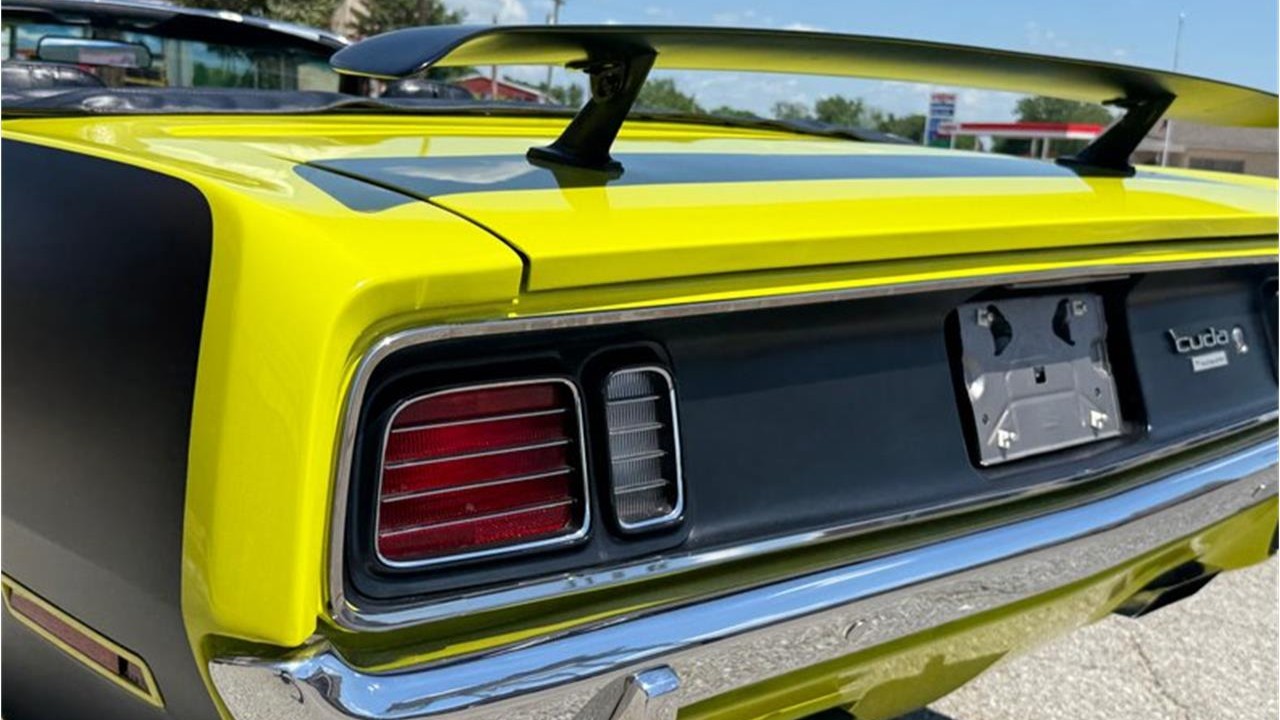
You’re welcome to argue with me if you wish, but Curious Yellow never looked better than it did on the Plymouth Barracuda. The Barracuda featured a heavy facelift for 1971 with quad headlights, parking lights that moved to below the bumper, simulated front fender louvers (on ‘Cuda models), and separated brake and reverse lights. Grilles were argent aside from certain ‘Cuda models depending on the paint chosen. The formerly standard road lamps were now optional on the ‘Cuda, and still available for regular Barracudas and Gran Coupes. A new stripe design, today known as the “Billboard,” was more outrageous and clearly outdid anything from Brand X. However, the buff books didn’t like the new styling, and an evolving market ended up demanding much fewer Barracudas than in 1970.
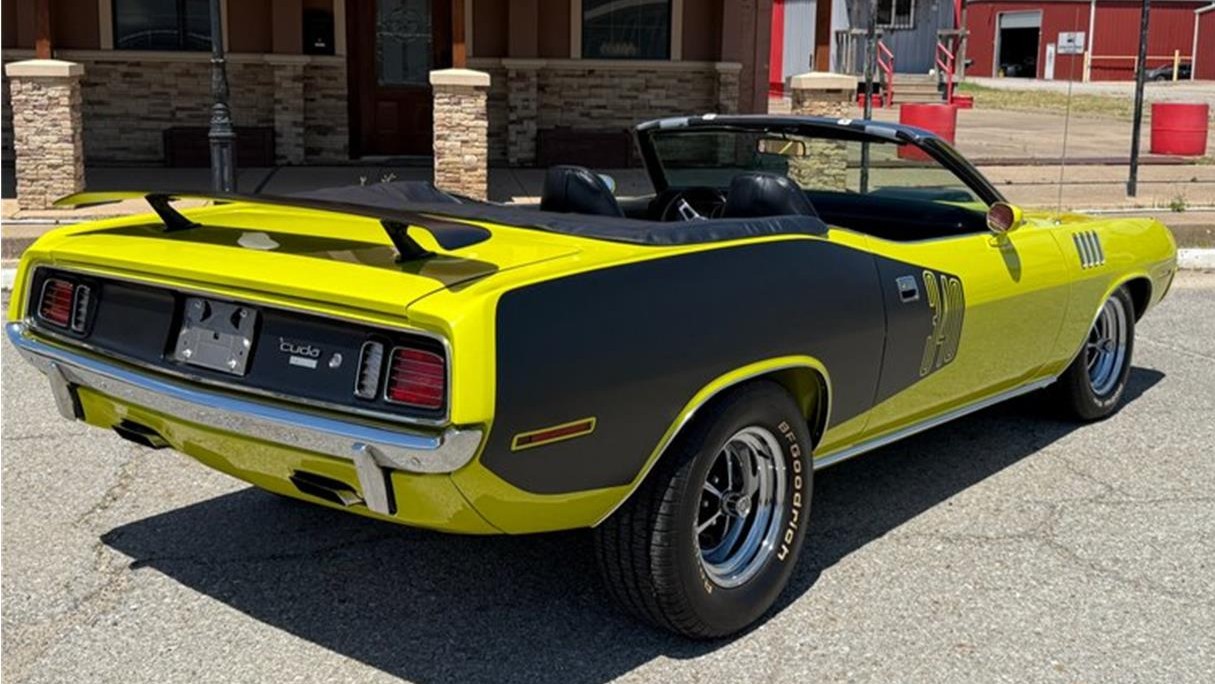
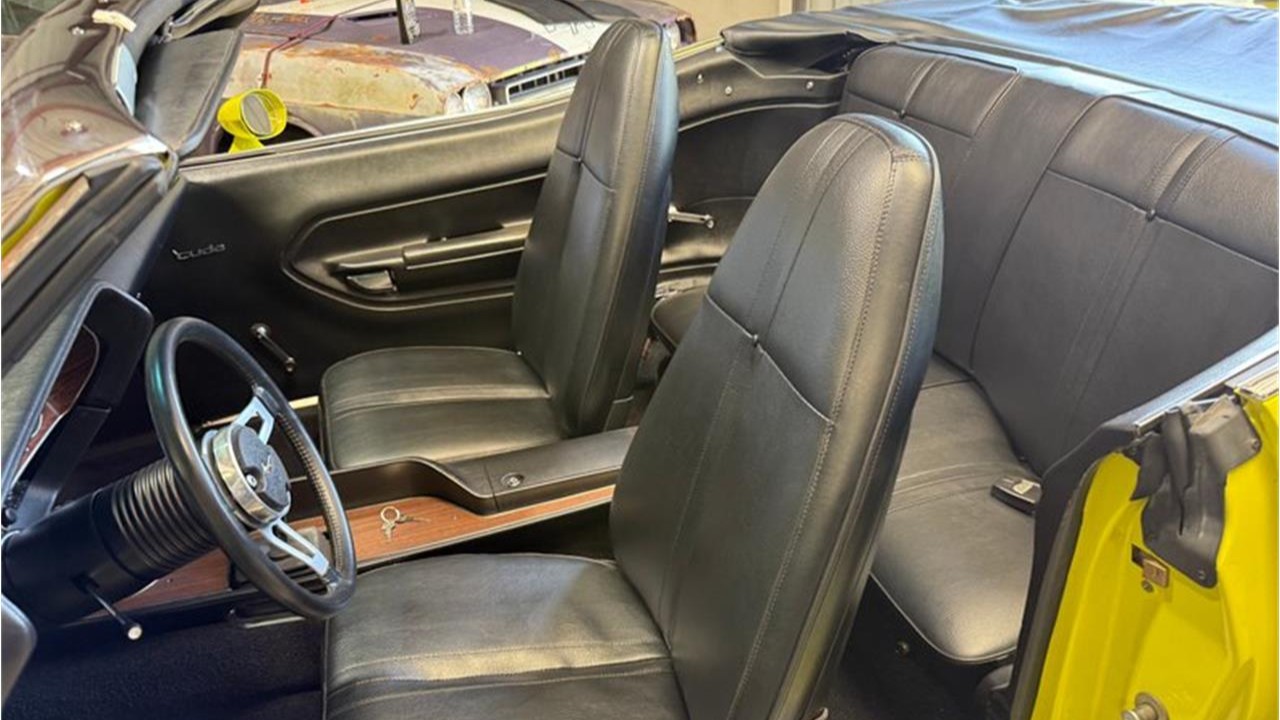
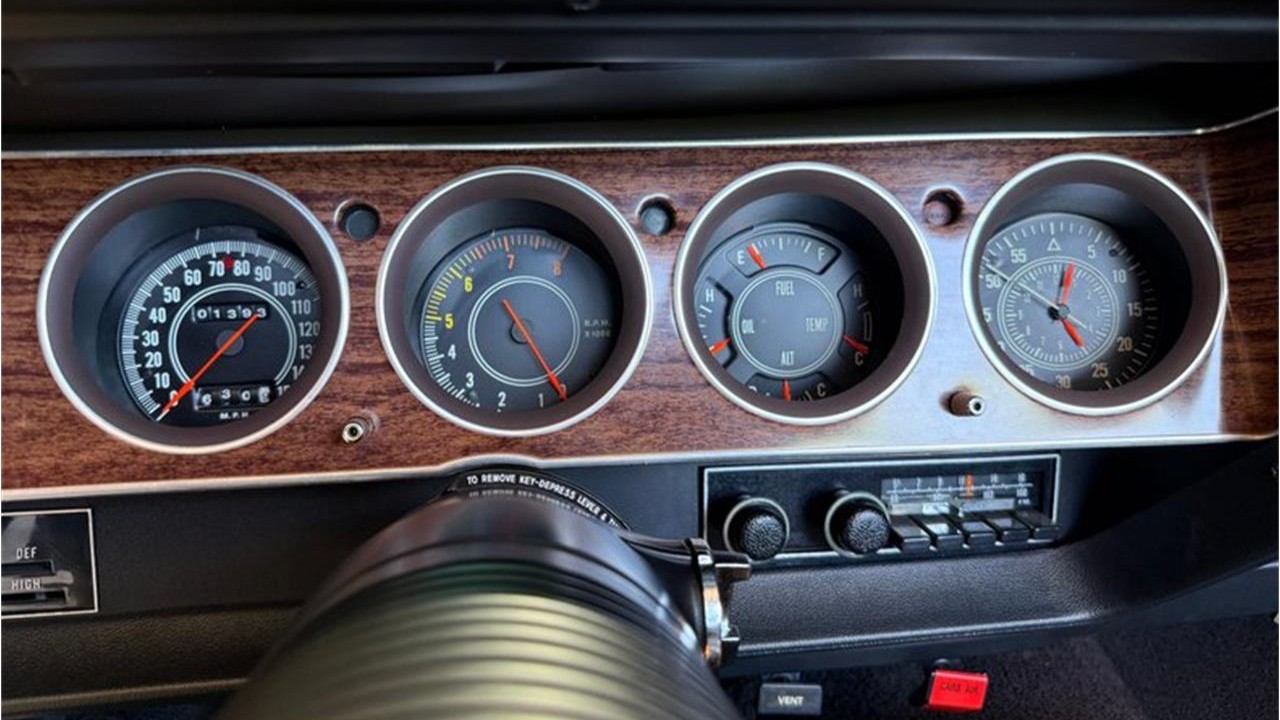
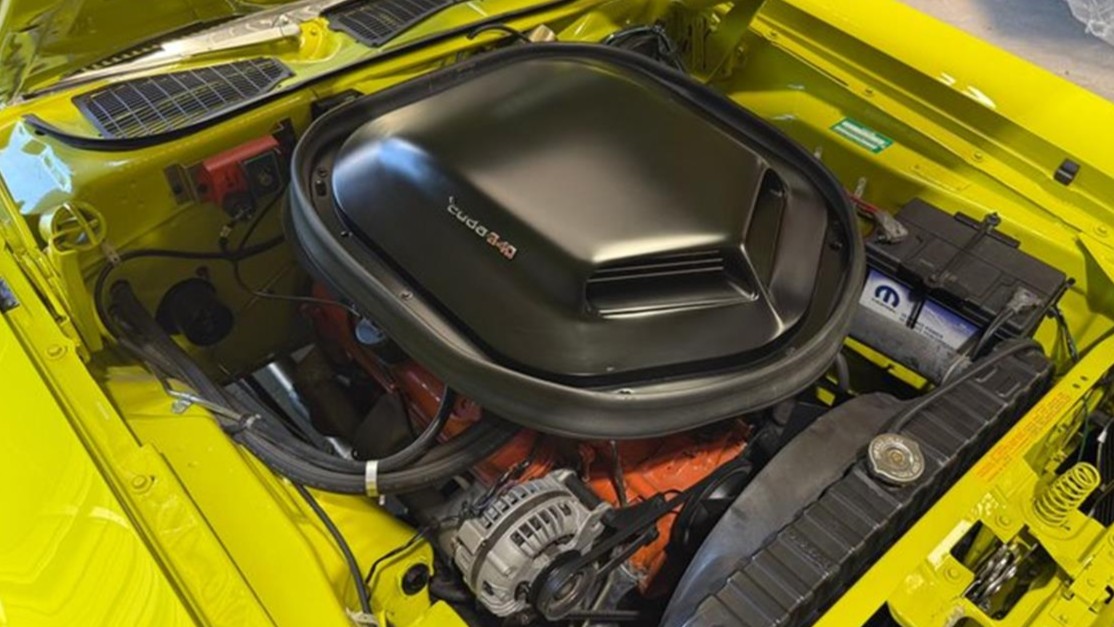
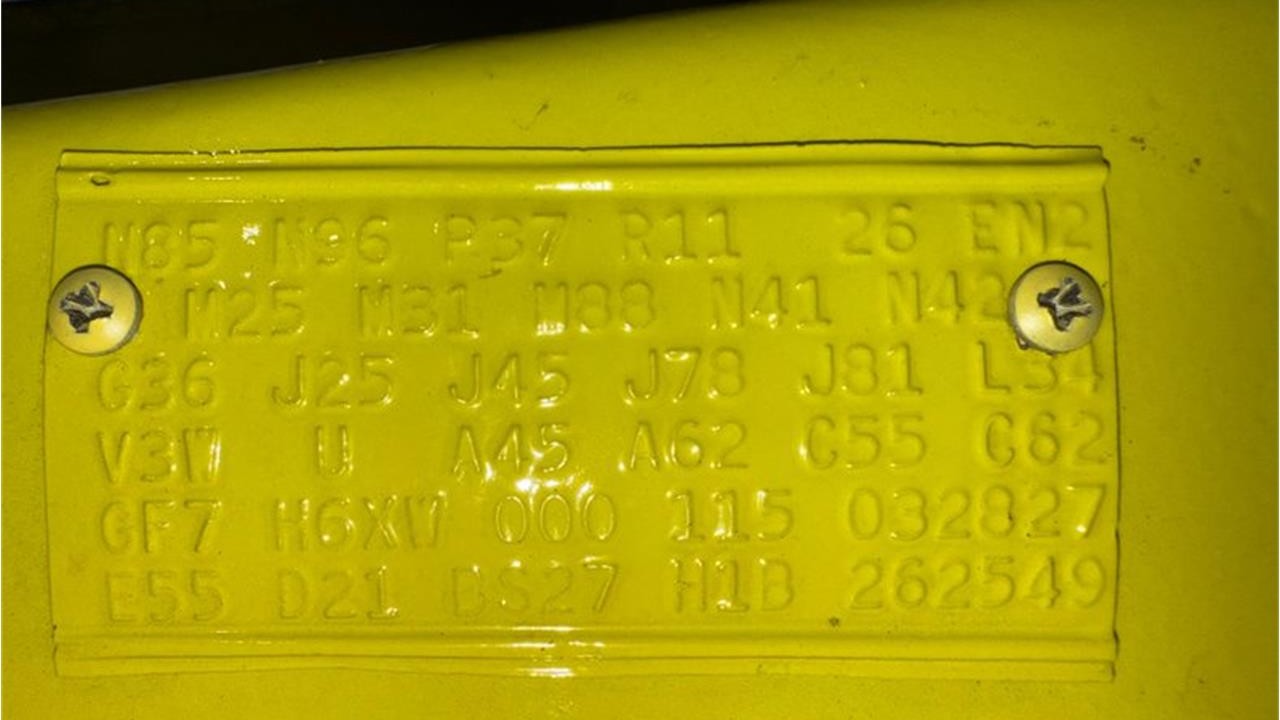
The 1971 Plymouth ‘Cuda convertible is one of the most desirable muscle cars, and one sprayed in Curious Yellow likely would command a premium. Truth be told, this example was originally painted in “GF7” Sherwood Green metallic with a white interior and top. However, check out the other options and you’ll see this car would be hot no matter what color: 340 four-speed, Shaker hood, rear wing, Rallye dashboard, and more. Aside from the color, Billboards and “A21” Elastomeric Front Bumper complete the package to make this car look as hot as a Barracuda could be. “The underside is just as gorgeous as the top, every brake/fuel line is new or redone. All suspension is painted or powder coated,” says the seller. “Everything works! Every light, every gauge, wipers and window washers, radio, horn, etc.”
When the industry was trying to get away from loud, horsepower-laden vehicles, along came the ‘Cuda to challenge the morals of America. If you decide to pay the $198,500 asking price, you can color me jealous.
Click here to view this Pick of the Day on ClassicCars.com
