

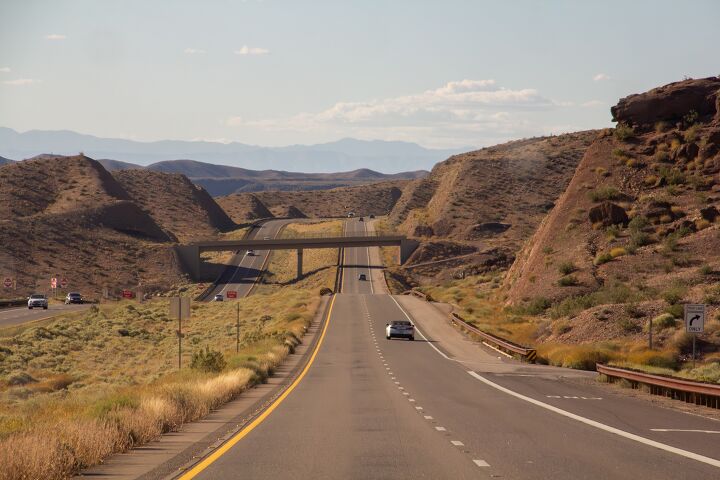
The State of Arizona has pending legislation that would do away with speed limits during daytime hours on select stretches of rural road.
Arizona Rep. Nick Kupper has put forward the Reasonable and Prudent Interstate Driving (RAPID) Act, or House Bill 2059, which he said was modeled after rules of the German Autobahn and past laws in Montana. Driving enthusiasts probably know that Montana has occasionally dabbled with doing away with speed limits on isolated stretches of country road. However, the issue has become a bit of a political football and the state presently has a maximum speed limit that’s only a little higher than the national average.
HB 2059 would effectively do away with speed limits during the day on qualifying rural interstates, starting with an one-year pilot period along I-8 to test how things go. However, limits would come back into play at sundown, adhering to the new statewide maximum speed of 80 mph.
This would also help the state determine which roads would best qualify under the RAPID Act. Currently the plan is to only allow extremely low density areas with a crash rate below the statewide average over the last five years to participate. Even then, they would still need to have supporting infrastructure based upon what the Arizona Department of Transportation deems necessary for implementation.
That would likely include things like signage and roads that were in good enough shape to accommodate vehicles traveling at exceptionally high speeds. Similar rules were in effect in Montana before the state went back to having universal speed limits.
This would make Arizona the only place in the United States where drivers could legally test how fast their vehicle can go. But local outlets have already suggested drivers have mixed opinions. Some are claiming it’s a great idea why others expressed concerns about the presumed risks involved.
Insurance companies, which nobody likes, have likewise framed it as a poor choice. In an interview with KJZZ Phoenix, Joseph Young with the Insurance Institute of Highway Safety referenced a 25-year study that suggested even minor increases in speed could have a significant impact on safety.
“On those higher speed roads a 5 mph increase on the speed limits associated with about an 8 [percent] increase in the fatality rate on those roads,” he said. “The evidence is pretty clear that there’s definitely a safety drawback when states do raise those speed limits.”
Other studies, like this one from AAA in 2023, have suggested that the issue is much more nuanced. While higher-speed crashes do tend to result in more serious accidents, the outlet repeatedly makes note that the changes are often not statistically significant.
Tracking crash statistics, we’ve actually seen an statistically relevant increase in per capita fatal accidents across the United States since 2011. This is often attributed to increased disparities in vehicle size (old cars are often smaller/lighter than new ones), more instances of distracted driving (phone use, in-vehicle infotainment), lackluster road conditions, and a surplus of pedestrian fatalities.
Studies have likewise suggested that most drivers tend to go whatever speed conditions allow within a given margin of the posted limit. In Michigan, where most of my driving gets done these days, most expressways are capped at 70 mph. But it’s not uncommon to see drivers going 90 mph when a given road is in good shape and the weather is clear.
While I certainly am not offering any recommendations, if I were on a desert road with miles of clear sightlines and zero chance of encountering cross traffic, I’m absolutely going to be driving well above the posted limit.
These are the exact kind of roads the RAPID Act is discussing. Kupper explained that existing research showed that over 80 percent of drivers on those types of roads were already traveling 77 mph and will typically match whatever speed traffic is already moving. This is a big reason why he wants to raise the maximum posted limit to 80 mph, because traffic is already moving that fast most of the time.
As noted, local outlets are doing a lot of pearl clutching. Fox 10 posted quotes from loads of unnamed citizens fretting over things like bad drivers or tailgating. Many of the quotes are barely intelligible, however, and this also sidesteps the issue. Drivers should undoubtedly be given the proper training to travel safely.
This includes staying to the right to let faster moving traffic pass and not tailgating. Germany has proven without question that proper drivers training and enforcement of laws other than speeding can result in safe stretches of road without speed limits. Your author also finds it laughable to express concerns over speed when most drivers already travel above posted limits and there’s a surplus of people ignoring their primary driving duty of remaining attentive behind the wheel while pecking at digital screens and loitering in the left lane.
The question is whether attentive drivers wanting to go faster should be forced to limit themselves to accommodate the lowest common denominator on empty stretches of interstate, or should the government continue to ignore certain types of bad drivers while prioritizing lower speeds few motorists actually adhere to?
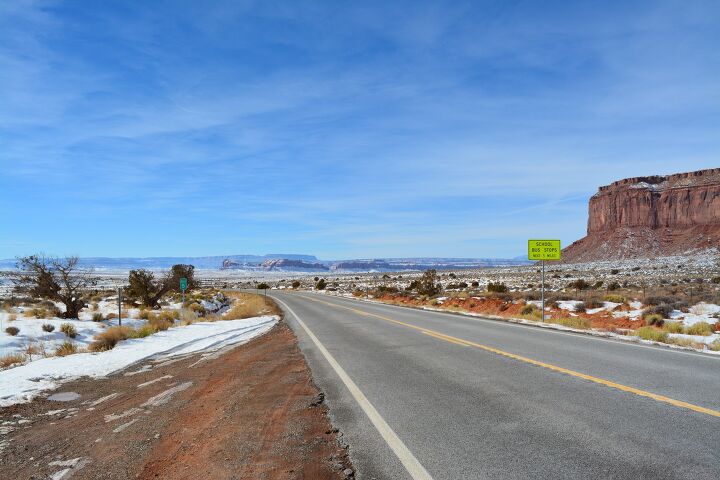
[Images: Sasanan Trakansuebkul/Shutterstock; Friederike Knauer/Shutterstock]
Become a TTAC insider. Get the latest news, features, TTAC takes, and everything else that gets to the truth about cars first by subscribing to our newsletter.
